
Quant SWE Interview Prep: Course Overview
Quant software engineering interviews are not normal coding interviews you see at FAANG. You still need algorithms, but the best firms also test how your code runs on a real machine. They ask about memory, CPU caches, allocation, threads, networking, and latency because small software delays can matter when a trading system is reacting to a fast-moving market.
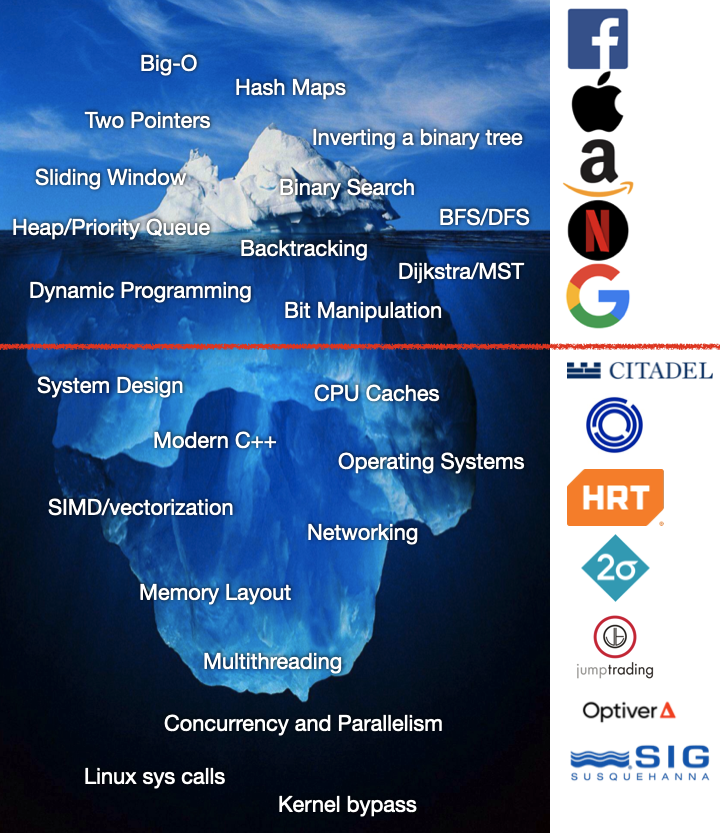

The motivation is simple: these roles can pay far more than ordinary SWE roles. Public compensation data changes by year, firm, level, and location, but the signal is clear. Levels.fyi reports Hudson River Trading software engineer packages in New York around USD 450K for entry-level roles and around USD 600K for senior roles, with the highest reported package at USD 1M. Yes, really. That doesn't mean every candidate gets those numbers. It means the upside is real enough to study for seriously.
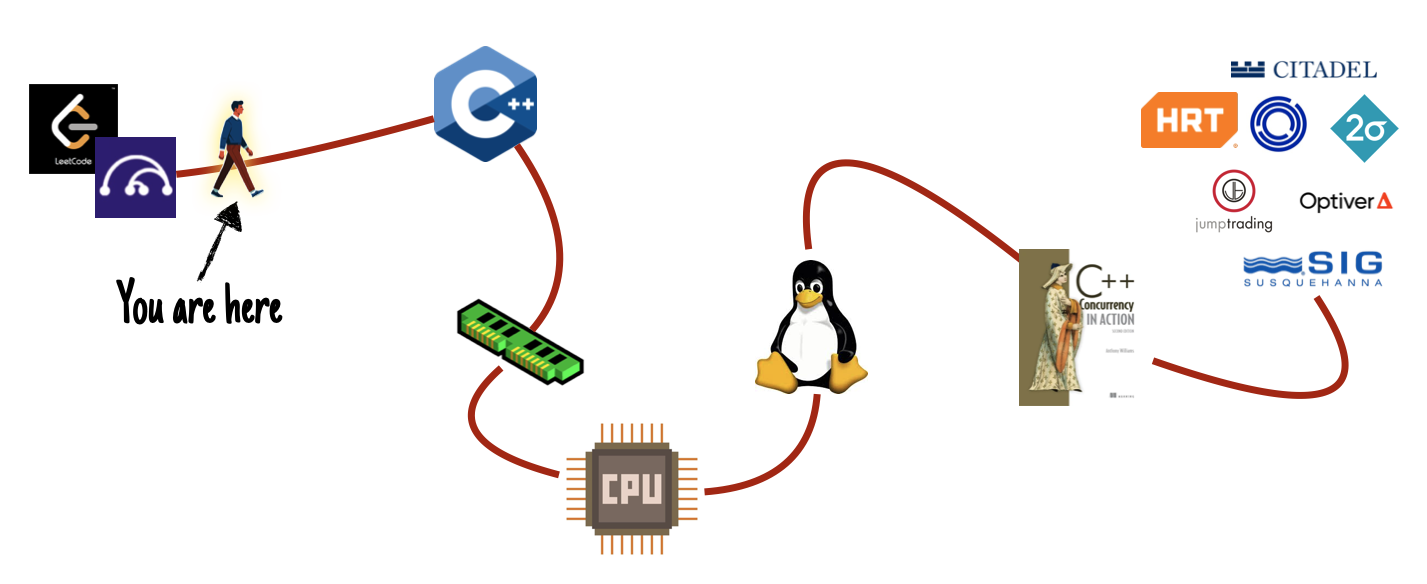
This course is for software engineers who are already familiar with LeetCode-style coding and want to prepare for quant/HFT SWE phone and onsite rounds. If you still need to build your algorithm foundation, start with the main AlgoMonster coding interview course first. This quant course assumes that base, then teaches the missing systems layer: C++, performance, concurrency, networking, and trading-system vocabulary.
If this field feels mysterious, that's normal. We will keep the finance examples concrete. Apple stock trades under the ticker AAPL. A market update might say "someone is willing to sell 500 shares of AAPL at USD 190.10." An order might say "buy 100 shares of AAPL at USD 190.10." A hot path is just the part of the code that runs again and again while those updates and orders are flowing through the system. The course will introduce these words slowly and tie them back to code you can read.
By the end of the first module, you should be able to take a performance claim and explain it from C++ source code down to memory layout, CPU behavior, allocation, dispatch, operating-system effects, or measurement quality. That is the core skill behind low-latency interview answers.
Who this course is for
You should be comfortable solving normal coding interview problems in Python, Java, or C++. You do not need to be a systems engineer already. You only need to read basic C++ syntax.
The course builds the missing model step by step: ownership, object lifetime, cache behavior, atomics, sockets, latency measurement, and the engineering patterns behind market data and order systems. You do not need prior trading experience. You need patience with C++ details and a clear way to explain them.
How the course is structured
Lessons are organized around interview prompts. Each lesson starts with a question you WILL hear in an interview. Then it explains the mental model, shows the C++ shape, and gives you the answer you should be able to say out loud.
Some prompts return later with more depth. For example, "Why is vector traversal faster than linked-list traversal beyond Big-O?" starts as a C++ container question. Later, it becomes a CPU cache question, then a benchmarking question.
The optional project track is separate. Projects help with resume signal and implementation depth, but the core course is built for interview performance.
Next, start with the cost model: what Big-O hides and why two pieces of C++ code with the same complexity can behave very differently on a real machine.